Ask a lender's flood determination form what a Wells cottage costs to insure and it will hand you one number. Ask the seller's declarations page and you might get a different one entirely, sometimes by a wide margin, for a house two doors down with the same square footage, the same distance to the water, and the same flood zone on the map.
That gap is not a pricing error. It's the ghost of a policy written years ago that quietly attaches to the building rather than the person who owns it, and whether a buyer inherits that ghost or starts fresh is one of the more consequential things that happens at a Wells closing table.
The instant quote hides more than it reveals
Since FEMA rolled out Risk Rating 2.0, most new National Flood Insurance Program policies no longer require an Elevation Certificate just to get a quote. The agency now leans on LiDAR remote sensing to estimate a structure's flood risk automatically, which is why a buyer can get a number from an agent in minutes without hiring a surveyor first.
That convenience masks a real cost, though. Apartment Coverage's elevation-certificate guide says an Elevation Certificate can still lower a premium in the right circumstances and remains a requirement if an owner ever wants to pursue a Letter of Map Amendment to argue their parcel shouldn't be in a mapped flood zone at all. Skipping the certificate at purchase because the quote didn't ask for one can mean leaving savings on the table for years, and it means the buyer never establishes a baseline to compare against later.
The FEMA consumer page on elevation certificates puts it plainly: most homeowners don't need one, except in the high-risk A and V zones that cover a meaningful share of Wells shorefront and near-water parcels. For those properties, the instant quote is a starting point, not the final word.
The rate that survives a closing
Here is the part that changes how a Wells transaction should actually be negotiated. Flood insurance, unlike homeowners insurance, can be assigned from a seller to a buyer at closing. FEMA calls this policy assumption, and it means a buyer isn't required to start from zero with a fresh quote based on today's flood zone and today's rating rules.
According to NFIP grandfathering guidance, if the seller's property was insured before a flood map change took effect, and they kept continuous coverage since then, they may be grandfathered into the older, often cheaper, flood zone rating rather than whatever the current map says. That grandfathered rate isn't tied to the seller personally. It's tied to the policy, and the policy can move to the next owner along with the deed.
A few mechanics matter here for anyone actually writing an offer:
- Clovered explains that an assumed policy carries no new waiting period. A brand new NFIP policy typically takes 30 days to become effective.
- National Flood Insurance says the seller does not get a refund for unused months on an annually paid premium when the policy transfers. That's a detail worth raising in negotiations if a seller is counting on that money back.
| Assuming the seller's policy | Writing a new policy | |
|---|---|---|
| Waiting period | None, coverage is continuous | Typically 30 days |
| Rate basis | Seller's grandfathered zone and BFE, if applicable | Current flood zone under today's map |
None of this shows up on a listing sheet. It shows up when a buyer's agent thinks to ask the seller's insurance agent for the declarations page before the inspection contingency expires.
Why Wells carries this weight more than most Maine towns
This isn't an abstract mechanism for Wells. The town's own flood hazard mitigation plan, prepared with FEMA's flood insurance study data, states that as of 2021 Wells had the greatest number of active National Flood Insurance Program policies of any community in York County, and the highest insurance premium prices of any community in the entire state of Maine. The same plan puts Wells property owners at the third highest claims payment amount statewide.
The plan names the specific water bodies driving that exposure: the Little River, the Ogunquit River, the Webhannet River, the Merriland River, and Wells Bay. Those are the waterways feeding the flood zones that show up on parcels from Drakes Island through the Wells Beach neighborhoods, and they're the reason a five-figure swing in annual premium between two similar homes isn't unusual here the way it might be in a market further from tidal water.
There's a second layer most buyers never hear about. The same town document notes that Wells previously participated in FEMA's Community Rating System, a voluntary program that rewards communities for floodplain management practices that go beyond the federal minimum with premium discounts for property owners in the Special Flood Hazard Area. Maine's CRS guide says discounts range up to 15 percent depending on the community's rating. The plan frames renewing that participation as a way to help offset costs for Wells homeowners going forward, which tells you the town is not currently enrolled and its flood-zone property owners are not currently receiving that discount other participating Maine towns can access.
Put together: Wells already carries more flood insurance exposure than almost anywhere else in the state, and it's doing so without the community-wide discount some neighboring towns receive. That's the backdrop against which an individual grandfathered rate becomes worth real money.
The renovation that erases the discount
Here is where Brooke's development background actually matters for this conversation. A grandfathered rate isn't permanent. Wells' own floodplain ordinance requires that any new construction or substantial improvement within the mapped AE and VE zones meet current elevation standards. Once a renovation crosses that line, the grandfathered zone and base flood elevation the previous owner locked in are gone.
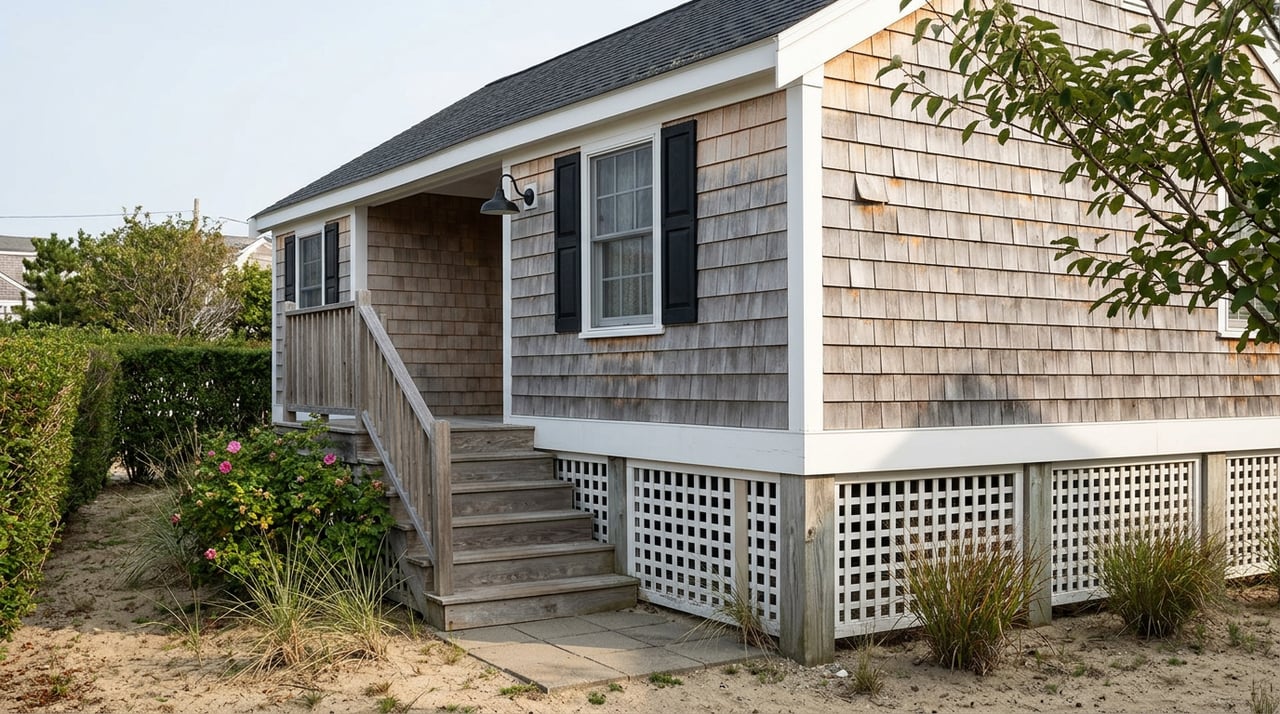
That's a real trap for a buyer who plans to gut a modest, pre-map cottage and expand it. The purchase might come with an attractive assumed flood policy, and the very renovation that makes the house feel move-in ready can be the trigger that erases the savings that made the deal pencil out in the first place. It's worth running the insurance math before finalizing renovation scope, not after the permits are pulled. Wells' Code Enforcement Office and the town's floodplain management ordinance spell out what counts as a substantial improvement in the town's specific flood zones, and it's a conversation worth having alongside any contractor bid.
Before writing an offer on a flood-zone cottage
A few questions are worth asking before an offer goes in on anything near Wells Bay, the Webhannet, or the other tidal waterways that shape this town's flood zones:
- Ask for the seller's flood insurance declarations page, not just a confirmation that a policy exists.
- Confirm whether the policy is NFIP-backed or private.
- Ask when the policy was first written relative to the property's most recent Flood Insurance Rate Map, since that timing determines whether a grandfathered rate is even in play.
- Ask about any renovation history on the structure, since a past substantial improvement may have already reset the clock on grandfathering.
FAQ
Does flood insurance transfer automatically when I buy a home in Wells? Not automatically. Coverage continues without a new waiting period once the assignment is completed.
Do I still need an elevation certificate to buy or insure a Wells property in 2026? Most buyers don't need one just to get a flood insurance quote, since FEMA's current rating system uses remote elevation data. An Elevation Certificate can still lower a premium in some cases and is required if an owner later wants to challenge their flood zone designation through FEMA's map amendment process.
What happens to my insurance rate if I renovate a grandfathered cottage? If the renovation qualifies as a substantial improvement under Wells' floodplain ordinance, any grandfathered flood zone or elevation benefit is lost.
The price on the sign is the easy number. The insurance carrying cost behind it is the one that actually shapes what a Wells waterfront property is worth owning. If you're weighing a purchase or getting ready to list a home near any of Wells' tidal waterways, Brooke Peterson can walk through what's attached to a specific property, insurance history included, before an offer goes in. Request Your Instant Home Valuation to start that conversation with real numbers in hand.
This article is general information, not legal, tax or financial advice. Consult a qualified professional about your situation.