Salt air is part of the magic of Wells Beach, but it is tough on homes. If you have watched paint fade faster than expected or seen deck screws stain and rust, you are not alone. The good news is you can choose materials that stand up to salt, wind, and freeze–thaw so your home looks great and needs less work. In this guide, you will learn which upgrades last in Wells, what to tackle before spring, and what today’s buyers value most. Let’s dive in.
Why salt air matters in Wells
Wells sits on the Atlantic, so homes face constant salt aerosol carried onshore by wind. Chloride in salt speeds up metal corrosion and breaks down coatings faster than inland conditions. Add winter freeze–thaw and spring storm events, and exterior materials work harder here.
Many beach properties are also in FEMA flood zones. That means flood‑resistant materials are recommended below base flood elevation and attention to drainage and elevation is important. Even if your home is only near the floodplain, building for moisture and salt resilience pays off.
Siding and trim that hold up
Fiber‑cement siding
Fiber‑cement is a top performer on the coast. It resists salt, insects, and rot, and it holds paint longer than many woods. It is heavier and needs good installation and joint treatment, but it delivers a durable New England look with less upkeep.
PVC or solid polymer trim
PVC trim boards and panels do not rot or rust, which is ideal for eaves, corner boards, and fascia. Plan for thermal expansion with correct fastener spacing and clearances. When installed properly, it is a low‑maintenance win.
Cedar shingles with care
Clear, vertical‑grain cedar shingles offer a classic Maine look. They can perform well if properly primed or stained and maintained. Expect more frequent touch‑ups near direct salt spray and avoid untreated softwoods below eaves unless you plan for regular maintenance.
Coastal‑grade paint and primers
Use premium 100% acrylic exterior paints formulated for coastal conditions. Look for UV and mildew resistance. Fiber‑cement often extends repaint cycles to 10 years or more depending on product and exposure, while wood typically needs attention sooner in salt fog zones.
Roofing that resists wind and salt
Standing‑seam metal
Aluminum or coated steel standing‑seam roofs with coastal‑grade finishes perform well in wind and salt. Pair them with stainless fasteners and aluminum or stainless flashings. Avoid uncoated steel in exposed areas.
Architectural asphalt shingles
High‑wind, polymer‑modified shingles are cost‑effective and widely accepted by buyers. Choose algae and mildew resistant options. As with any roof, proper flashing and underlayment are just as important as the shingle itself.
Flashings and gutters
Use aluminum or 316 stainless steel for flashings, gutters, and downspouts near the shore. These materials reduce rust streaking and premature failure in salt spray.
Decking and railings that last
Capped composite decking
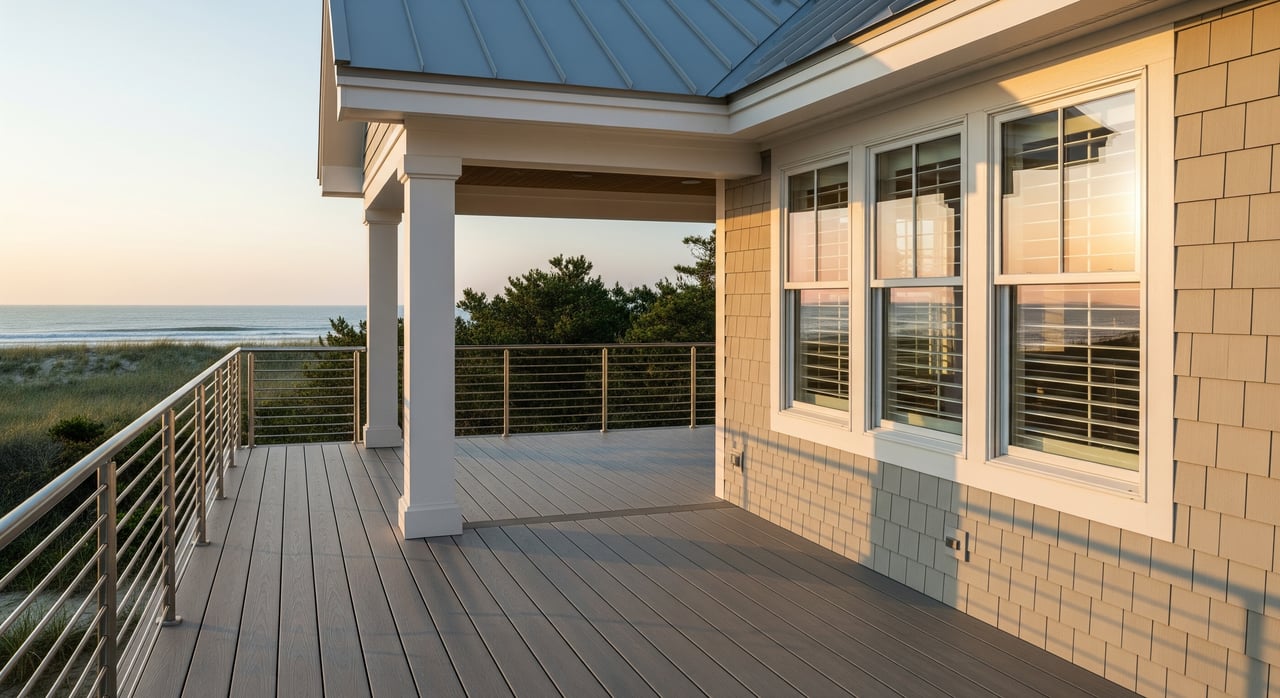
Composite decking with a protective polymer cap resists moisture, salt, and splintering. Lifespans commonly extend 20 to 30 years depending on brand and exposure. It is a popular low‑maintenance choice for second‑home owners.
PVC decking
All‑plastic boards handle salt and moisture very well and require minimal upkeep. Allow for heat expansion and protect the surface from hot objects to avoid marking.
Tropical hardwoods
Dense species like ipe or cumaru perform exceptionally when installed with the right fasteners. Expect impressive durability with periodic maintenance if you want to preserve a rich wood tone.
Pressure‑treated wood
It lowers upfront cost but needs frequent sealing in coastal conditions and has a shorter life if exposed to constant salt and wetting. It is prone to cupping and checking in these cycles.
Railings and hardware
Choose powder‑coated aluminum or 316 stainless railings for long‑term performance. Avoid plated finishes that can flake under salt exposure.
The fasteners make the upgrade
Fasteners and connectors are where many coastal projects succeed or fail. In direct salt spray zones, 316 stainless screws and bolts are the standard for decking, siding attachments, and exposed hardware. For less exposed areas, hot‑dip galvanized connectors can be acceptable, but expect shorter life near the ocean. Always match fasteners to the manufacturer’s coastal warranty requirements so product warranties remain valid.
Windows and doors buyers notice
Windows built for the coast
Aluminum‑clad wood windows combine a durable exterior with a warm interior. Vinyl can be a low‑maintenance choice if specified with coastal hardware and quality sealants. All‑aluminum frames with marine coatings offer strong corrosion resistance. Look for “coastal” or “marine” packages that include corrosion‑resistant hardware, better drainage, and enhanced seals.
Doors that do not swell or rot
Fiberglass doors provide the look of wood without the warping and rot. Aluminum or aluminum‑clad doors are also durable when finished for coastal use. Solid wood doors need strict sealing and frequent refinishing on exposed facades, which can be time‑intensive.
Glazing, flashing, and air sealing
Quality flashing and marine‑rated sealants at window and door perimeters are critical to prevent leaks and staining. Storm‑rated glazing or storm doors are a plus in Wells due to strong winds and winter weather.
Paints, caulks, and sealants that last
Choose marine or coastal‑rated sealants, such as polyurethane or polysulfide, in joints exposed to salt. These options adhere well and stay flexible. Pair them with premium acrylic exterior paint systems that include mildew resistance. Expect shorter repaint cycles in direct salt fog than inland locations.
Metals, lighting, and exterior electrics
Use 316 stainless, solid bronze, or powder‑coated aluminum for fixtures, railings, and visible metalwork. These choices resist pitting and flaking. For exterior electrical boxes and conduits, use corrosion‑resistant materials with sealed enclosures and locate equipment away from splash and windborne salt when possible.
Smart upgrades with strong resale appeal
Wells buyers, especially second‑home owners, want low‑maintenance materials that look right for coastal Maine. These upgrades tend to pay off at resale:
- Fiber‑cement siding with PVC or fiber‑cement trim to replace failing wood.
- Coastal‑rated, energy‑efficient windows that include corrosion‑resistant hardware and a transferable warranty.
- Capped composite or PVC decks installed with 316 stainless fasteners.
- Fiberglass or aluminum‑clad exterior doors paired with marine‑grade hardware.
- Aluminum or stainless gutters and flashings that prevent rust streaks.
Energy efficiency and storm resilience add value too. Buyers appreciate features that can simplify insurance conversations, like upgraded windows, well‑detailed flashing, and durable decks.
A practical maintenance plan for Wells Beach
Salt exposure shortens maintenance cycles, but a simple routine goes a long way. Use this schedule to protect your investment.
Immediate and seasonal
- Rinse siding, decks, railings, and hardware with fresh water every 1 to 3 months during high salt and wind periods or after big storms.
- Inspect caulking and flashing around windows and doors. Reseal any failed joints.
- Clear gutters and downspouts. Confirm smooth flow and drainage away from the foundation.
Annual checks
- Inspect roofs, flashings, chimney seals, and mechanical penetrations.
- Test window and door operation. Lubricate hardware with products suited for coastal use.
- Clean decks and check fasteners. Tighten or replace any corroded screws.
Every 3 to 7 years
- Repaint or touch up exposed painted surfaces as needed. Plan for shorter cycles in direct salt spray.
- Replace exterior sealants every 5 to 10 years based on product and exposure.
Documentation
- Keep receipts and warranties for coastal‑rated materials and hardware. Transferable warranties and maintenance logs help at resale and can support insurance claims.
Flood and insurance notes for beach properties
If your home is in a FEMA VE or A zone, use flood‑resistant materials below base flood elevation where required or recommended. That includes water‑resistant sheathing and appropriate insulation types. Insurers may prefer certain material choices or equipment placements, so confirm whether upgrades could help with insurability or premiums before you build.
Cost‑savvy planning and phasing
You do not need to replace everything at once. Prioritize upgrades that stop moisture first. Address flashing, sealants, and gutters so water is directed away from the structure. Next, replace failing wood trim with PVC or fiber‑cement alternatives and tackle the most weathered elevations.
When you plan a deck project, budget for 316 stainless fasteners from the start. If your siding is stable, you can improve curb appeal with a premium repaint and targeted trim replacement. If you plan to list within the next year, choose upgrades that a buyer can see and touch. A composite deck, a fiberglass front door, or new coastal‑rated windows signal low upkeep and reduce buyer anxiety.
What this means for your sale
In Wells, lifestyle buyers want the beach without weekend repair lists. When you invest in salt‑air‑resistant materials, you cut maintenance and strengthen your listing story. Highlight coastal‑rated components, show receipts, and confirm whether warranties transfer. Presenting a home that is durable and easy to care for can shorten time on market and support stronger offers.
If you want help prioritizing upgrades for your Wells Beach property or you are preparing to sell this spring, reach out. With local coastal experience and practical construction literacy, Brooke Peterson can help you plan smart improvements and position your home to stand out.
FAQs
What siding works best for Wells Beach homes?
- Fiber‑cement siding is a top coastal choice due to its resistance to salt, insects, and rot, while cedar shingles can work well if properly finished and maintained.
Do I really need 316 stainless fasteners near the ocean?
- Yes for exposed areas near salt spray, since 316 stainless offers better chloride resistance; galvanized options in these zones typically have a shorter life.
Is composite or PVC decking worth the higher cost?
- For most Wells second‑home owners, yes, because these materials reduce maintenance while delivering 20 to 30 year lifespans under typical coastal conditions.
How often should I rinse my exterior in a salt environment?
- Monthly during windy, salty periods works well, and always after major storms to remove salt deposits from siding, decks, and hardware.
Will coastal‑rated windows and doors help at resale?
- Buyers value low maintenance and storm resilience, so documented coastal packages, energy efficiency, and transferable warranties can boost appeal.
What should I upgrade first if I am on a budget?
- Start with moisture control: fix flashing and sealant issues, improve gutters and drainage, then replace failing trim with PVC or fiber‑cement before tackling larger projects.